
How a Visual Bedtime Routine Can Reduce Bedtime Struggles
If bedtime feels like a nightly battle, you’re not alone. Many children struggle with transitions at the end of the day, especially when they are tired, overstimulated, or unsure of what comes next. One of the most effective and simple tools for easing bedtime resistance is a visual bedtime routine.
Children thrive on predictability. When bedtime follows the same clear sequence each night, it feels safer and more manageable.
A visual routine works because it:
Reduces anxiety by showing what will happen next
Supports children who struggle to process verbal instructions when tired
Encourages independence and cooperation
Removes parents from the role of constant reminder
Instead of repeatedly telling your child what to do, the routine does the talking!
What a Visual Bedtime Routine Looks Like
A visual bedtime routine is a simple chart or set of pictures that shows each step of bedtime in order. For young children, images work far better than words.
You can use a laminated chart with pictures, individual picture cards that can be flipped or moved (attached to a board with Velcro), or a small booklet with one step per page. There are endless ways to make this work! Choose something that is easy for you to make, and easy for your child to use every night.
How to Create an Effective Bedtime Routine
Most children do best with four to six steps, so keep the routine simple and predictable. Too many steps can lead to overwhelm and stalling.
A typical routine might include:
Bath or wash up
Pajamas
Brush teeth
Books
Cuddles or a song
Lights out
Once you choose the order, keep it the same every night.
Something to consider is each step’s proximity to your child’s room. To keep a nice flow to your evening, try to arrange the routine in a way that moves you closer to the bed with each step. For example, you would want to finish all the bathroom activities – bath, brush teeth, potty – before moving on to the bedroom steps like reading a book.
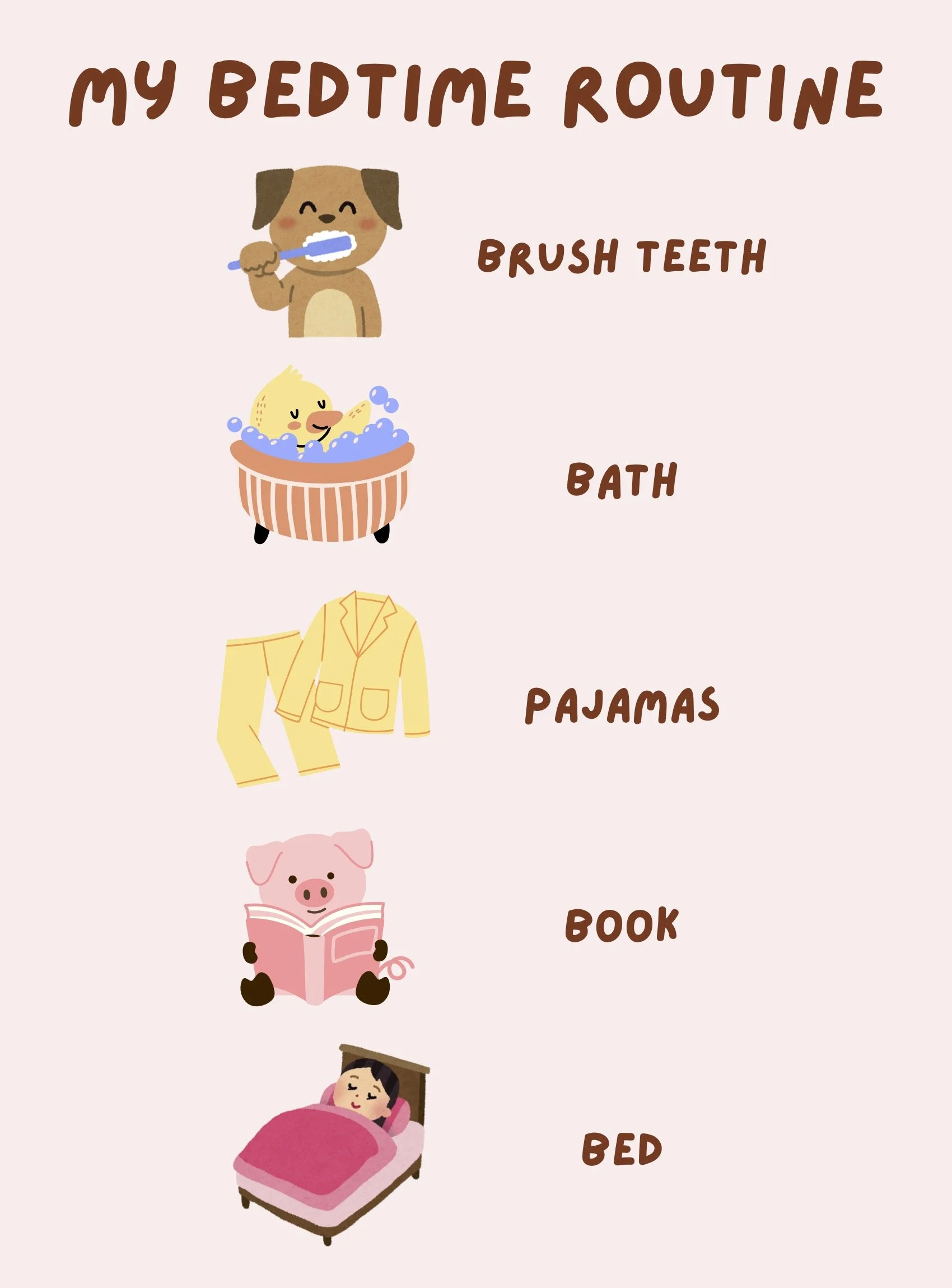
Here is an example of a successful bedtime routine.
This routine works because it provides simple images that are easy to understand, and your child can point to the steps and tell you what she should do next!
This routine is available to download here.
Introduce the Routine Before Bedtime
Do not wait until bedtime to introduce something new. Earlier in the day, sit with your child and walk through the routine together. Talk about each step and practice pointing to the pictures.
Use calm, confident language such as, “This is what bedtime looks like every night.”
This helps your child know what to expect before they are already tired.
Use the Routine to Guide Bedtime
As bedtime begins, refer to the chart instead of repeating instructions. Point to each step as it happens. When one step is finished, let your child move the card or turn the page.
If your child stalls or protests, gently redirect by asking, “What’s next on your bedtime chart?”
This keeps bedtime calm and neutral. Asking them to show you what’s next also gives them a sense of control over the steps. If they make a mistake (even if it’s an intentional attempt at stalling), avoid escalating, and simply say “Oops! We already did that, I think our next step is to put PJs on,” or “Uh-oh, we skipped a step! Let’s brush teeth first.”
We want to keep this as positive as we can, so avoid harsh corrections or admonishing unwanted behaviors. Give attention to the behaviors you want to see more of, and don’t spend much energy on unwanted behaviors. Eventually, the routine will become second nature to everyone!
Hold Loving and Consistent Boundaries
A visual routine works best when it is paired with consistency. Try not to add extra steps or exceptions, even on harder nights.
If your child asks for something outside the routine, acknowledge the feeling and redirect. For example, “I know you want another book. Books are finished. Next is cuddles.”
Clear and predictable boundaries help children feel safe, even when they push back.
Common Pitfalls to Avoid
Changing the routine frequently
Using the chart as a reward or punishment
Adding steps to stop protests
Negotiating once lights are out
Consistency is what makes the routine effective.
Is a Visual Bedtime Routine Right for Your Child?
Visual routines are especially helpful for toddlers and preschoolers, children with anxiety or sensory sensitivities, and kids who stall or negotiate at bedtime. They are also a great support during big transitions like a new sibling, travel, or schedule changes.
Final Thoughts
Bedtime does not have to feel exhausting or emotionally charged, and using this simple tool can help everyone feel more confident. A visual bedtime routine creates structure, reduces power struggles, and helps your child move into sleep feeling calm and secure.
If you would like help creating a personalized bedtime routine or need support navigating bedtime challenges, working with a sleep consultant can make a meaningful difference for your family.